read the paragraph below and answer the question that follows.\n\naccording to historian taeka uji, \the…
read the paragraph below and answer the question that follows.\n\naccording to historian taeka uji, \the most fascinating time in japanese history was the era of the samurai. these warriors had a huge impact then, and still have an influence on culture today.\\n\nwhich paragraph correctly uses an ellipsis to indicate an omission of quoted material?\n\naccording to historian taeka uji, \the most fascinating time in japanese history was the era of the samurai. these warriors . . . , still have an influence on culture today.\\n\naccording to historian taeka uji. . . . , \the most fascinating time in japanese history was the era of the samurai. these warriors had a huge impact then, and still have an influence on culture today.\\n\naccording to historian taeka uji, \the most fascinating time in japanese history was the era of the samurai. these warriors had a huge impact then . . .\\n\naccording to historian taeka uji, \the most fascinating time in japanese history was the era of the samurai. these warriors . . . still have an influence on culture today.\
Answer
Answer:
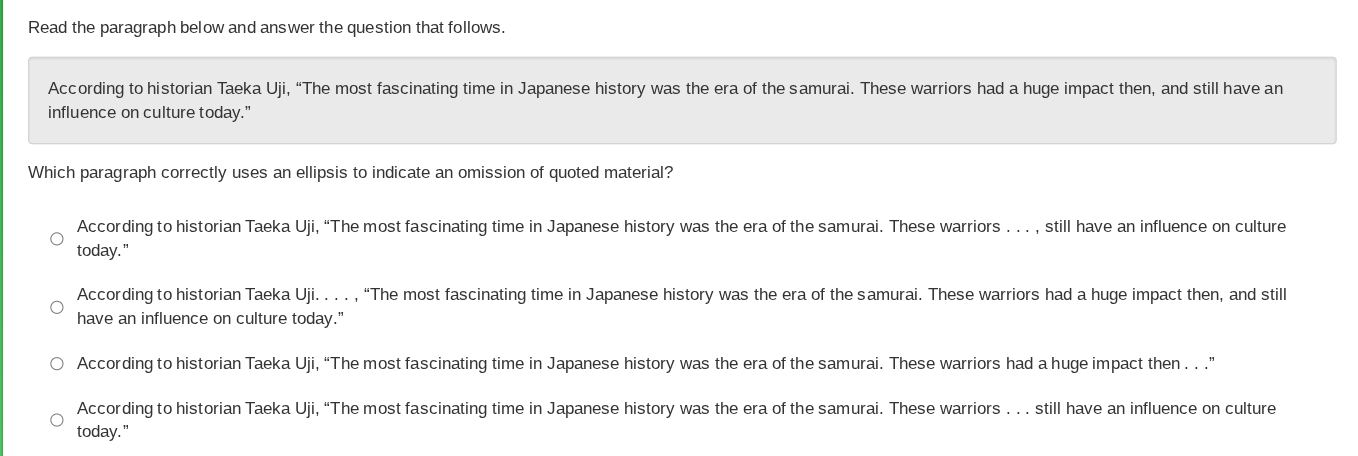
D. According to historian Taeka Uji, "The most fascinating time in Japanese history was the era of the samurai. These warriors . . . still have an influence on culture today."
Brief Explanations:
An ellipsis correctly shows omitted quoted material by replacing removed text (here, "had a huge impact then, and") without extra punctuation. The other options use ellipses incorrectly: Option A adds an unnecessary comma after the ellipsis; Option B places the ellipsis outside the quoted material where no text is omitted; Option C cuts off the quote awkwardly without clear omitted relevant context matching the original's meaning.