source passage: the tablet debate\nmodern classrooms are evolving. digital tablets offer a \dynamic\…
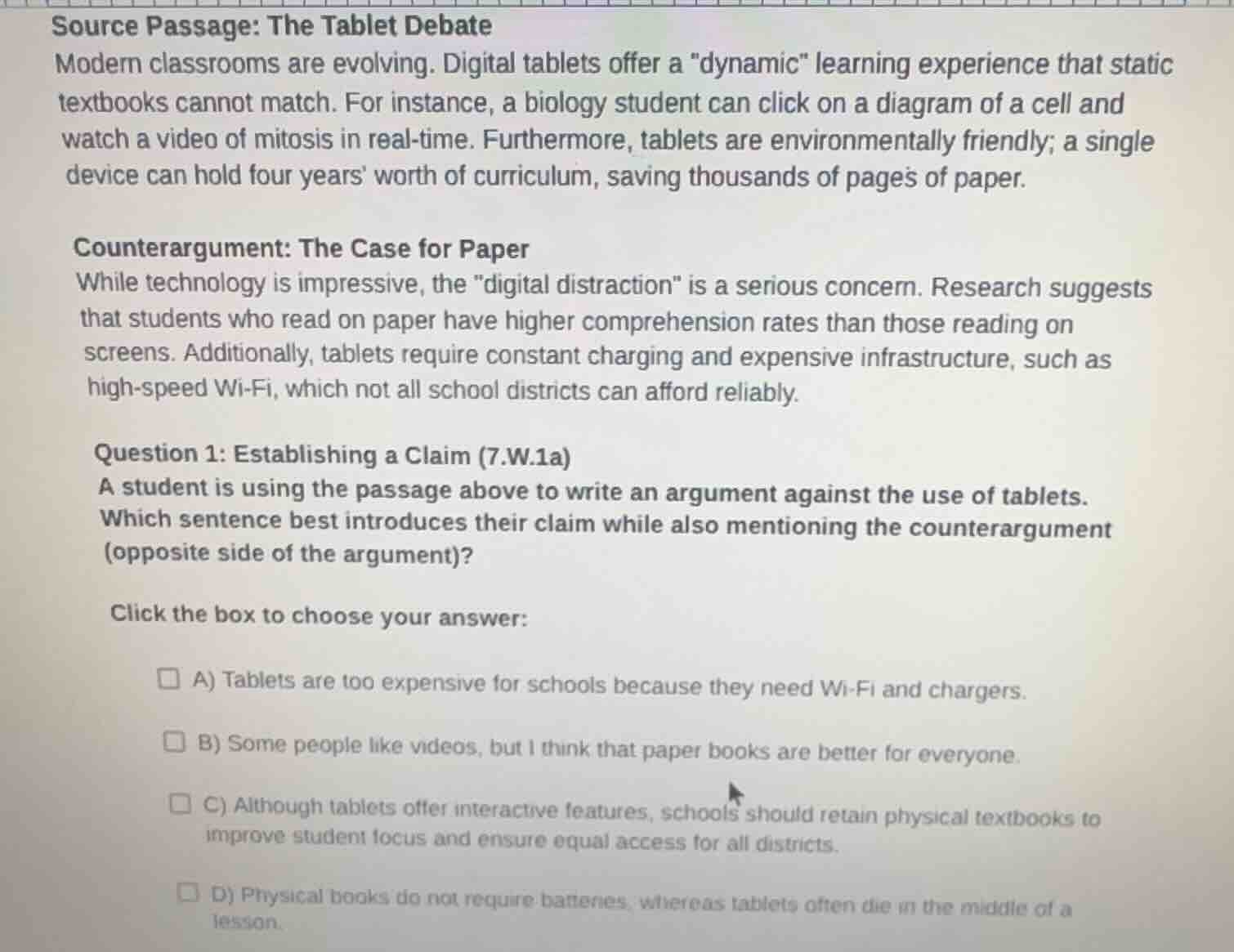
source passage: the tablet debate\nmodern classrooms are evolving. digital tablets offer a \dynamic\ learning experience that static textbooks cannot match. for instance, a biology student can click on a diagram of a cell and watch a video of mitosis in real-time. furthermore, tablets are environmentally friendly; a single device can hold four years worth of curriculum, saving thousands of pages of paper.\n\ncounterargument: the case for paper\nwhile technology is impressive, the \digital distraction\ is a serious concern. research suggests that students who read on paper have higher comprehension rates than those reading on screens. additionally, tablets require constant charging and expensive infrastructure, such as high-speed wi-fi, which not all school districts can afford reliably.\n\nquestion 1: establishing a claim (7.w.1a)\na student is using the passage above to write an argument against the use of tablets. which sentence best introduces their claim while also mentioning the counterargument (opposite side of the argument)?\n\nclick the box to choose your answer:\n\na) tablets are too expensive for schools because they need wi-fi and chargers.\nb) some people like videos, but i think that paper books are better for everyone.\nc) although tablets offer interactive features, schools should retain physical textbooks to improve student focus and ensure equal access for all districts.\nd) physical books do not require batteries, whereas tablets often die in the middle of a lesson.
Answer
Brief Explanations:
To introduce a claim while acknowledging a counterargument, a writer should use a complex sentence structure, often starting with a dependent clause (using transition words like "although" or "while") to recognize the opposing view, followed by an independent clause that states the main claim. Option C effectively uses this structure by[SSE onError error]