superfoods\nerin sullivan\n1its a bird—its a plane—its a superfood! despite its superlative name, a…
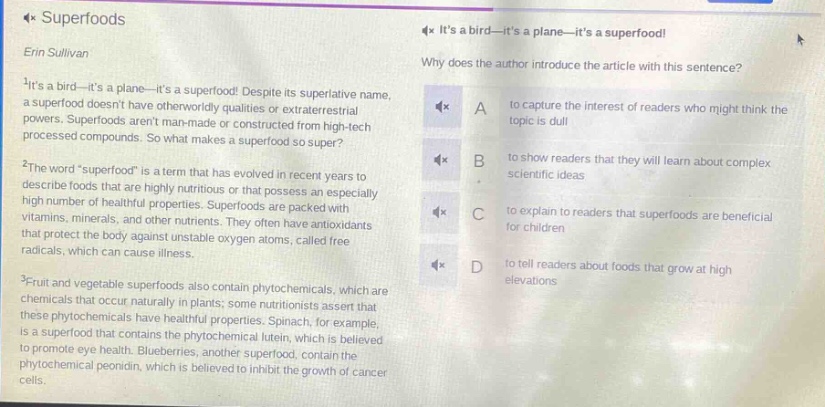
superfoods\nerin sullivan\n1its a bird—its a plane—its a superfood! despite its superlative name, a superfood doesnt have otherworldly qualities or extraterrestrial powers. superfoods arent man - made or constructed from high - tech processed compounds. so what makes a superfood so super?\n2the word “superfood” is a term that has evolved in recent years to describe foods that are highly nutritious or that possess an especially high number of healthful properties. superfoods are packed with vitamins, minerals, and other nutrients. they often have antioxidants that protect the body against unstable oxygen atoms, called free radicals, which can cause illness.\n3fruit and vegetable superfoods also contain phytochemicals, which are chemicals that occur naturally in plants; some nutritionists assert that these phytochemicals have healthful properties. spinach, for example, is a superfood that contains the phytochemical lutein, which is believed to promote eye health. blueberries, another superfood, contain the phytochemical peonidin, which is believed to inhibit the growth of cancer cells.\nits a bird—its a plane—its a superfood!\nwhy does the author introduce the article with this sentence?\na to capture the interest of readers who might think the topic is dull\nb to show readers that they will learn about complex scientific ideas\nc to explain to readers that superfoods are beneficial for children\nd to tell readers about foods that grow at high elevations
Answer
Brief Explanations:
The opening sentence "It's a bird—it's a plane—it's a superfood!" is an attention - grabbing statement. It is designed to pique the interest of readers who might otherwise find the topic of superfoods dull. By using a fun and unexpected comparison, the author aims to draw the readers in.
Answer:
A. to capture the interest of readers who might think the topic is dull