once we have latched onto one of them—the color of the tablecloth on aunt jeans holiday table and the old…
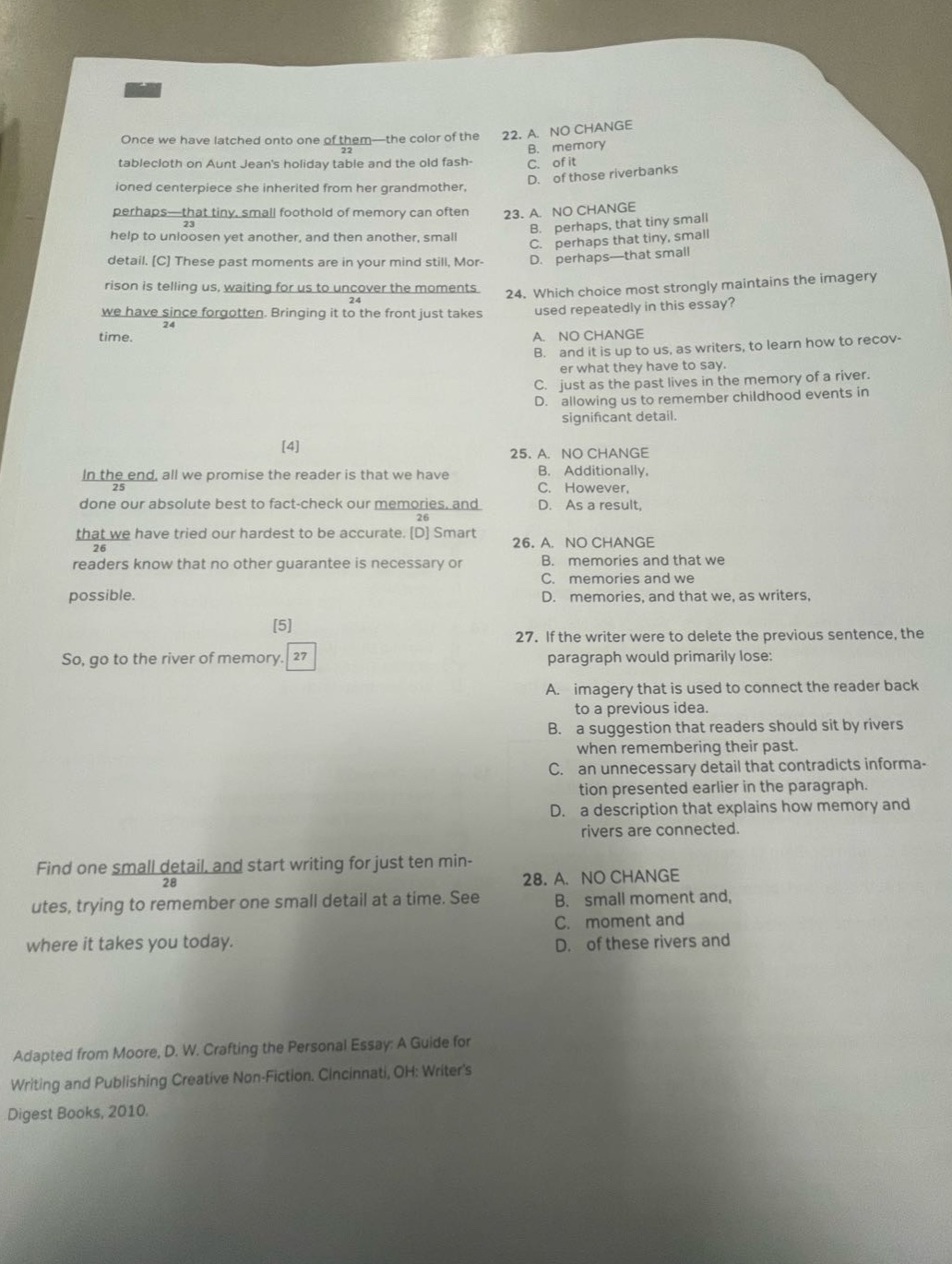
once we have latched onto one of them—the color of the tablecloth on aunt jeans holiday table and the old - fashioned centerpiece she inherited from her grandmother, perhaps—that tiny, small foothold of memory can often help to unloosen yet another, and then another, small detail. c these past moments are in your mind still, morison is telling us, waiting for us to uncover the moments we have since forgotten. bringing it to the front just takes time. 4 in the end, all we promise the reader is that we have done our absolute best to fact - check our memories, and that we have tried our hardest to be accurate. d smart readers know that no other guarantee is necessary or possible. 5 so, go to the river of memory. find one small detail and start writing for just ten minutes, trying to remember one small detail at a time. see where it takes you today. adapted from moore, d. w. crafting the personal essay: a guide for writing and publishing creative non - fiction. cincinnati, oh: writers digest books, 2010. 22. a. no change b. memory c. of it d. of those riverbanks 23. a. no change b. perhaps, that tiny, small c. perhaps that tiny, small d. perhaps—that small 24. which choice most strongly maintains the imagery used repeatedly in this essay? a. no change b. and it is up to us, as writers, to learn how to recover what they have to say. c. just as the past lives in the memory of a river. d. allowing us to remember childhood events in significant detail. 25. a. no change b. additionally, c. however, d. as a result, 26. a. no change b. memories and that we c. memories and we d. memories, and that we, as writers, 27. if the writer were to delete the previous sentence, the paragraph would primarily lose: a. imagery that is used to connect the reader back to a previous idea. b. a suggestion that readers should sit by rivers when remembering their past. c. an unnecessary detail that contradicts information presented earlier in the paragraph. d. a description that explains how memory and rivers are connected. 28. a. no change b. small moment and, c. moment and d. of these rivers and
Answer
Brief Explanations:
- "one of them" refers to a memory, so "memory" is the most appropriate.
- "tiny" and "small" are redundant, so the most concise option is chosen.
- The repeated imagery in the essay is related to memory as a river, so C maintains that imagery.
- "In the end" indicates a conclusion, and "However" shows a contrast which is appropriate here.
- The parallel structure "that we have... and that we have" is maintained by option A.
- The sentence with "river of memory" connects to the previous idea of memory as a river, so A is correct.
- "small moment" is more appropriate than "small detail" in this context as it is more in - line with the overall theme of writing about moments.
Answer:
- B. memory
- D. perhaps—that small
- C. just as the past lives in the memory of a river.
- C. However,
- A. NO CHANGE
- A. imagery that is used to connect the reader back to a previous idea.
- B. small moment and,