writing prompt\n\nwrite an argumentative essay about whether leisure time is better scheduled or…
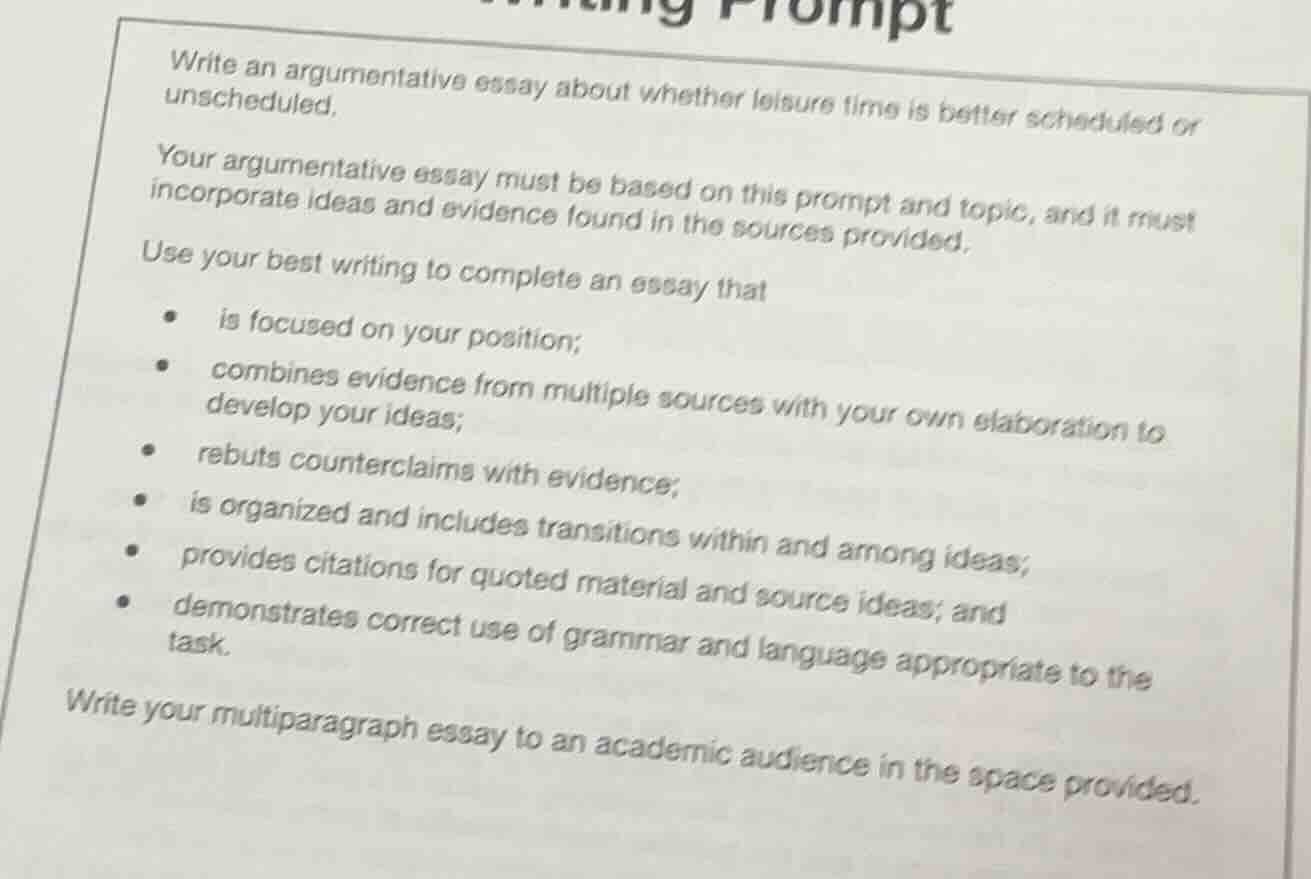
writing prompt\n\nwrite an argumentative essay about whether leisure time is better scheduled or unscheduled.\n\nyour argumentative essay must be based on this prompt and topic, and it must incorporate ideas and evidence found in the sources provided.\n\nuse your best writing to complete an essay that\n- is focused on your position;\n- combines evidence from multiple sources with your own elaboration to develop your ideas;\n- rebuts counterclaims with evidence;\n- is organized and includes transitions within and among ideas;\n- provides citations for quoted material and source ideas; and\n- demonstrates correct use of grammar and language appropriate to the task.\n\nwrite your multiparagraph essay to an academic audience in the space provided.
Answer
Brief Explanations:
The debate over whether leisure time should be scheduled or unscheduled hinges on the balance between productivity and psychological well-being. Proponents of scheduled leisure argue that planning ensures time is actually set aside for relaxation in a busy world, preventing "time famine." However, psychological research often suggests that "scheduling" fun can make it feel like work, reducing the intrinsic motivation and joy associated with the activity. This phenomenon, known as the "overjustification effect," occurs when external structures (like a calendar invite) diminish the internal desire to engage in a hobby. Conversely, unscheduled leisure promotes spontaneity and genuine relaxation, though it carries the risk of time being wasted on "low-quality" passive activities like mindless scrolling. An effective argument must weigh the efficiency of a schedule against the restorative power of freedom.
Answer:
The Case for Spontaneity: Why Unscheduled Leisure is Superior
In the modern era, the boundary between work and life has become increasingly blurred, leading many to believe that the only way to "save" leisure is to schedule it. However, treating free time like a business meeting fundamentally undermines its purpose. Leisure time is most beneficial when it remains unscheduled, as spontaneity fosters genuine psychological restoration and prevents the "workification" of play.
The primary argument against scheduling leisure is that it transforms enjoyable activities into obligations. When a hobby is placed on a calendar, it becomes a "to-do" item. Research in behavioral economics suggests that once a leisure activity is scheduled, people begin to focus on the end goal rather than the experience itself. This shift reduces the "flow state"—the immersive mental state where time seems to disappear—which is essential for true relaxation. By keeping leisure unscheduled, individuals allow themselves the freedom to engage in activities based on their current mood and energy levels, rather than a predetermined plan made days in advance.
Critics of unscheduled time argue that without a plan, people often succumb to "decision paralysis" or default to passive activities like watching television. They claim that scheduling ensures "high-quality" leisure, such as exercise or socializing. While it is true that some structure can prevent procrastination, a rigid schedule often leads to resentment. If a person is exhausted but has a "scheduled" hike, the hike becomes a chore rather than a relief. Unscheduled time allows for the flexibility that human psychology requires to recover from the rigid demands of the workplace.
In conclusion, while scheduling may offer the illusion of productivity, it strips leisure of its most vital component: freedom. To truly recharge, one must step away from the clock. By embracing unscheduled time, we protect the intrinsic joy of our hobbies and ensure that our rest is as restorative as possible.