1 you are probably familiar with the english nursery rhyme about the old woman who lived in a shoe. thats…
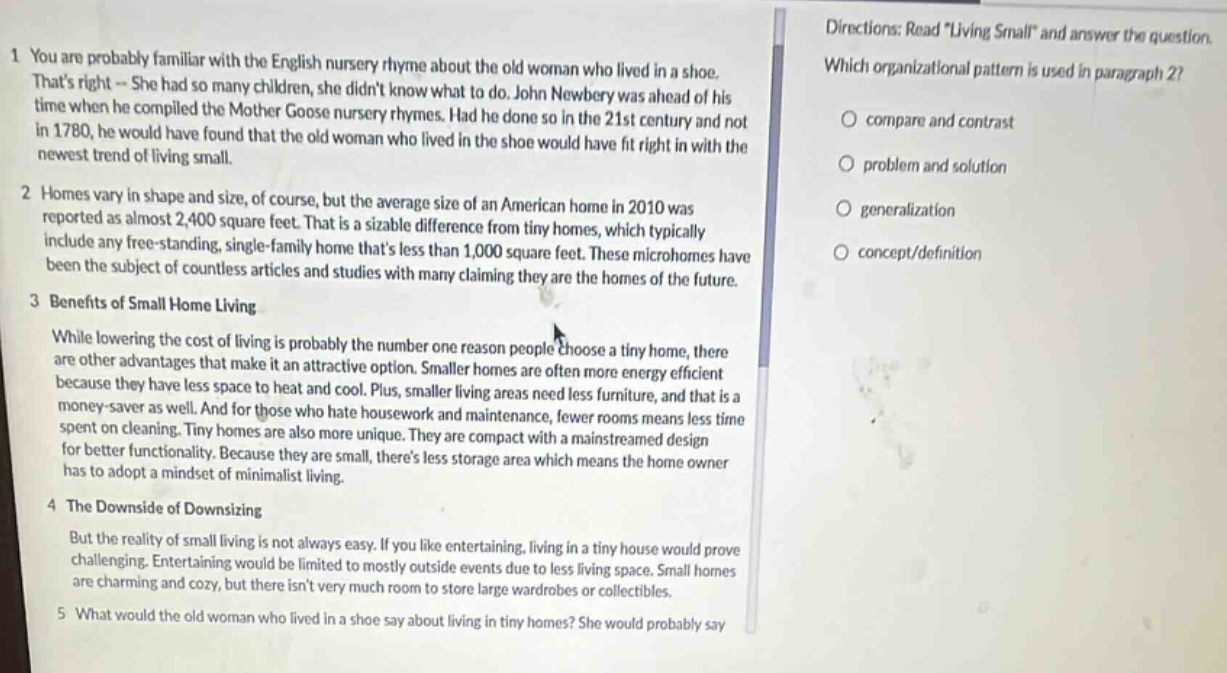
1 you are probably familiar with the english nursery rhyme about the old woman who lived in a shoe. thats right -- she had so many children, she didnt know what to do. john newbery was ahead of his time when he compiled the mother goose nursery rhymes. had he done so in the 21st century and not in 1780, he would have found that the old woman who lived in the shoe would have fit right in with the newest trend of living small. 2 homes vary in shape and size, of course, but the average size of an american home in 2010 was reported as almost 2,400 square feet. that is a sizable difference from tiny homes, which typically include any free - standing, single - family home thats less than 1,000 square feet. these microhomes have been the subject of countless articles and studies with many claiming they are the homes of the future. 3 benefits of small home living while lowering the cost of living is probably the number one reason people choose a tiny home, there are other advantages that make it an attractive option. smaller homes are often more energy efficient because they have less space to heat and cool. plus, smaller living areas need less furniture, and that is a money - saver as well. and for those who hate housework and maintenance, fewer rooms means less time spent on cleaning. tiny homes are also more unique. they are compact with a mainstreamed design for better functionality. because they are small, theres less storage area which means the home owner has to adopt a mindset of minimalist living. 4 the downside of downsizing but the reality of small living is not always easy. if you like entertaining, living in a tiny house would prove challenging. entertaining would be limited to mostly outside events due to less living space. small homes are charming and cozy, but there isnt very much room to store large wardrobes or collectibles. 5 what would the old woman who lived in a shoe say about living in tiny homes? she would probably say directions: read \living small\ and answer the question. which organizational pattern is used in paragraph 2? compare and contrast problem and solution generalization concept/definition
Answer
Answer:
No se especifica el párrafo 27 en el texto proporcionado, pero si se asume que el texto completo se refiere:
- El patrón organizacional es compare and contrast. En el texto, se presentan tanto los beneficios (ventajas) como los inconvenientes (desventajas) de vivir en una casa pequeña, lo que es un patrón de comparación y contraste.
Brief Explanations:
El texto enumera ventajas (costos bajos, eficiencia energética) e inconvenientes (limitaciones para entretenimiento, espacio de almacenamiento) de las casas pequeñas, lo que indica un patrón de comparación y contraste.